
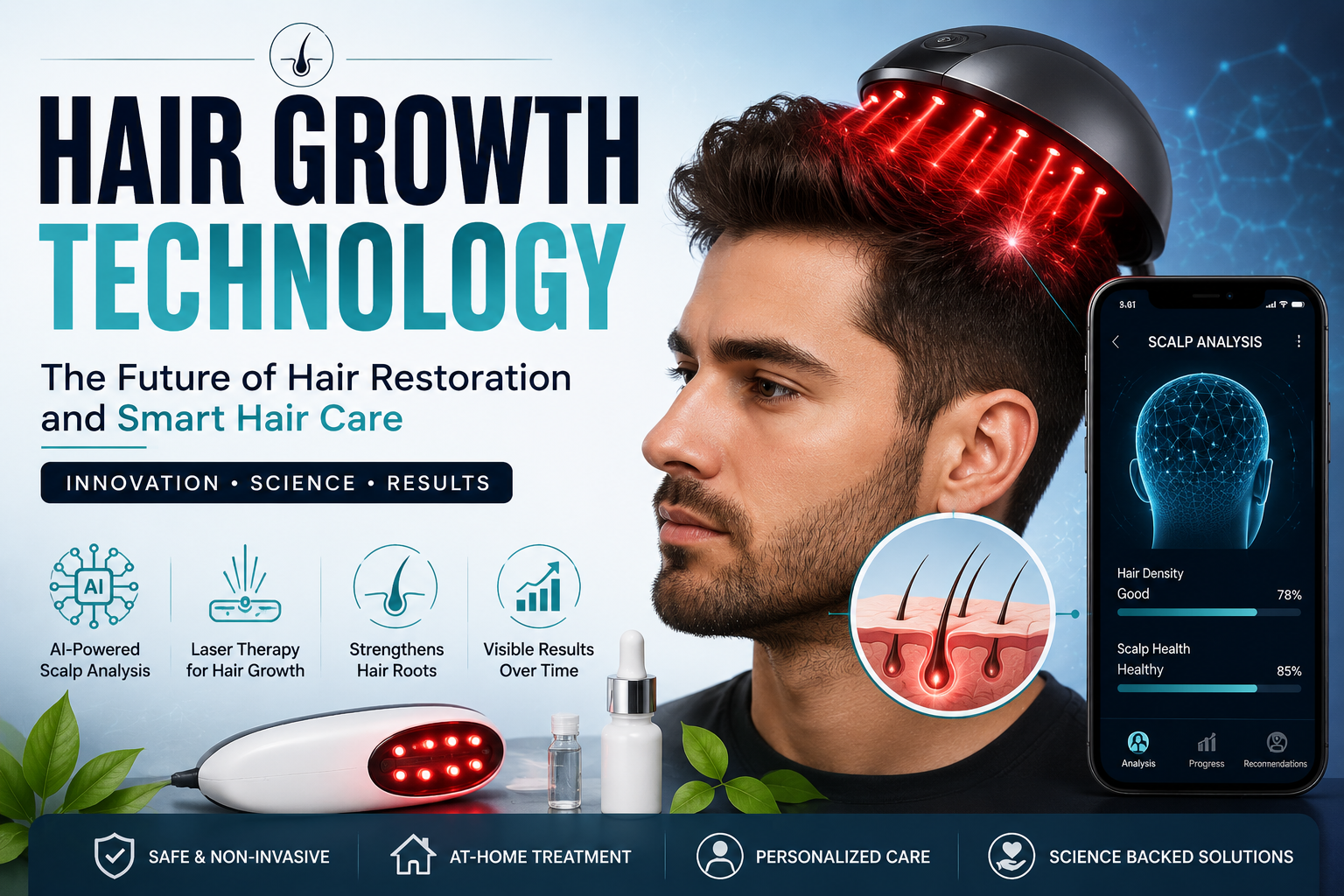
Hair Growth Technology: How Innovation Is Transforming Hair Care and Hair Restoration
Hair loss is one of the most common concerns affecting millions of people worldwide. Whether caused by genetics, hormonal changes, stress, aging, nutritional deficiencies, or medical conditions, hair loss can significantly impact confidence and self-esteem. Fortunately, advancements in beauty technology have led to the development of innovative hair growth solutions that offer new hope to individuals seeking healthier, fuller hair.
Hair Growth Technology is a rapidly growing segment of the beauty tech industry that combines science, engineering, and healthcare to develop effective solutions for hair restoration and scalp health. From laser therapy devices and smart scalp analyzers to AI-powered hair diagnostics and regenerative treatments, technology is revolutionizing how people approach hair care.
In this article, we will explore the evolution of hair growth technology, the latest innovations in the industry, their benefits, limitations, and what the future holds for hair restoration.
Understanding Hair Loss
Before discussing the technology behind hair growth, it is important to understand why hair loss occurs.
Hair growth follows a natural cycle consisting of three phases:
1. Anagen Phase (Growth Phase)
This is the active growth stage where hair follicles produce new hair strands. This phase can last several years.
2. Catagen Phase (Transition Phase)
Hair growth slows down, and the follicle begins preparing for renewal.
3. Telogen Phase (Resting Phase)
Hair eventually sheds and makes room for new growth.
Hair loss occurs when this cycle becomes disrupted. Factors such as genetics, stress, hormonal imbalance, poor nutrition, and certain medical conditions can shorten the growth phase and increase hair shedding.
What Is Hair Growth Technology?
Hair Growth Technology refers to the use of advanced scientific and technological solutions designed to promote hair growth, improve scalp health, reduce hair loss, and restore hair density.
These technologies often combine:
- Light therapy
- Artificial Intelligence (AI)
- Sensors and imaging systems
- Biotechnology
- Regenerative medicine
- Wearable devices
The goal is to provide more effective and personalized hair care solutions than traditional treatments alone.
The Evolution of Hair Growth Solutions
For decades, people relied on home remedies, oils, shampoos, and medications to combat hair loss. While some of these methods remain effective, technology has introduced more targeted and data-driven solutions.
Modern hair growth technology focuses on identifying the root cause of hair loss and providing customized treatments based on individual needs.
Today, consumers can monitor scalp health, track hair density, and even receive AI-generated recommendations using smart devices and mobile applications.
Key Technologies Driving Hair Growth Innovation
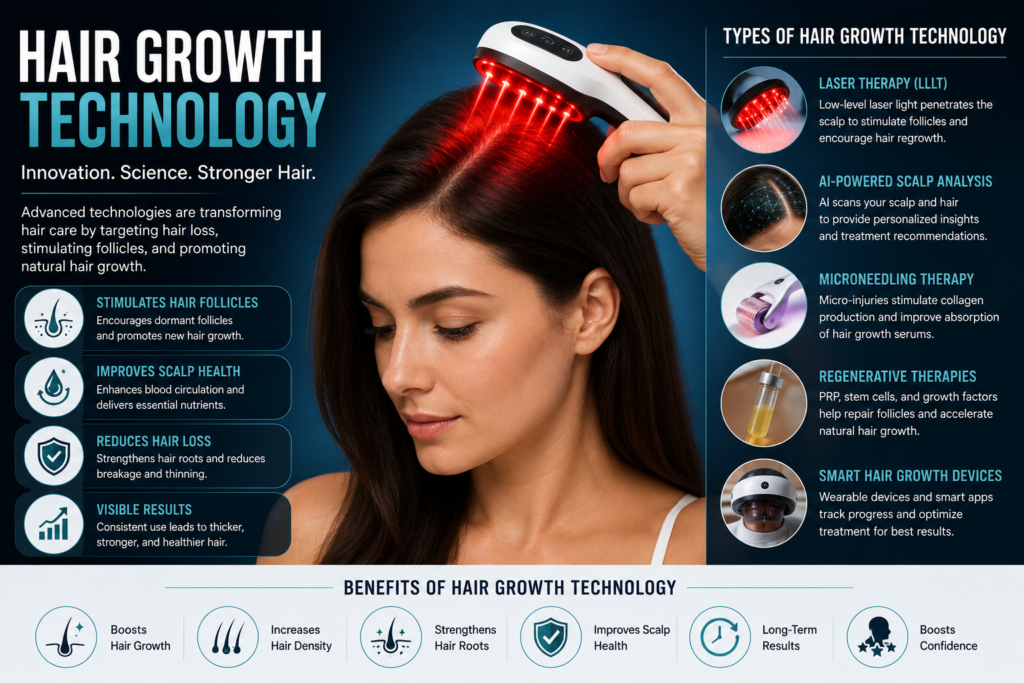
1. Low-Level Laser Therapy (LLLT)
Low-Level Laser Therapy is one of the most widely adopted technologies in the hair restoration industry.
LLLT uses low-intensity red light to stimulate hair follicles and improve blood circulation in the scalp. Increased blood flow delivers more oxygen and nutrients to hair follicles, potentially supporting healthier hair growth.
Common LLLT Devices
- Laser caps
- Laser helmets
- Laser combs
- Laser bands
Benefits
- Non-invasive
- Painless treatment
- Easy home use
- Suitable for men and women
Limitations
- Results may vary
- Requires consistent use
- May take several months to show visible improvement
2. AI-Powered Hair Analysis
Artificial Intelligence is transforming the beauty industry, including hair care.
AI-powered hair analysis systems use smartphone cameras, scalp imaging tools, and machine learning algorithms to evaluate:
- Hair density
- Scalp condition
- Hair thinning patterns
- Hair breakage
- Follicle health
Based on the collected data, AI systems generate personalized recommendations for products, treatments, and lifestyle improvements.
Advantages
- Personalized recommendations
- Early detection of hair issues
- Improved treatment accuracy
- Convenient home monitoring
3. Smart Scalp Monitoring Devices
Modern smart scalp analyzers provide detailed insights into scalp health.
These devices can assess:
- Oil levels
- Dryness
- Scalp sensitivity
- Hair follicle condition
- Hydration levels
The information helps users develop customized hair care routines tailored to their scalp needs.
As consumers increasingly seek personalized beauty solutions, smart scalp technology is becoming a valuable tool in hair management.
4. Microneedling Technology
Microneedling involves the use of tiny needles to create controlled micro-injuries on the scalp.
This process stimulates:
- Collagen production
- Blood circulation
- Cellular repair mechanisms
Microneedling is often combined with topical treatments to improve product absorption and effectiveness.
Many dermatologists consider microneedling a promising option for individuals experiencing hair thinning.
5. Stem Cell and Regenerative Hair Treatments
One of the most exciting developments in hair growth technology is regenerative medicine.
Researchers are exploring the use of:
- Stem cells
- Growth factors
- Platelet-rich plasma (PRP)
- Tissue engineering
These treatments aim to reactivate dormant follicles and promote natural hair regeneration.
Although some regenerative therapies are still under development, they have shown significant potential in clinical studies.
The Role of Wearable Hair Growth Devices
Wearable technology has become a major trend across healthcare and beauty industries.
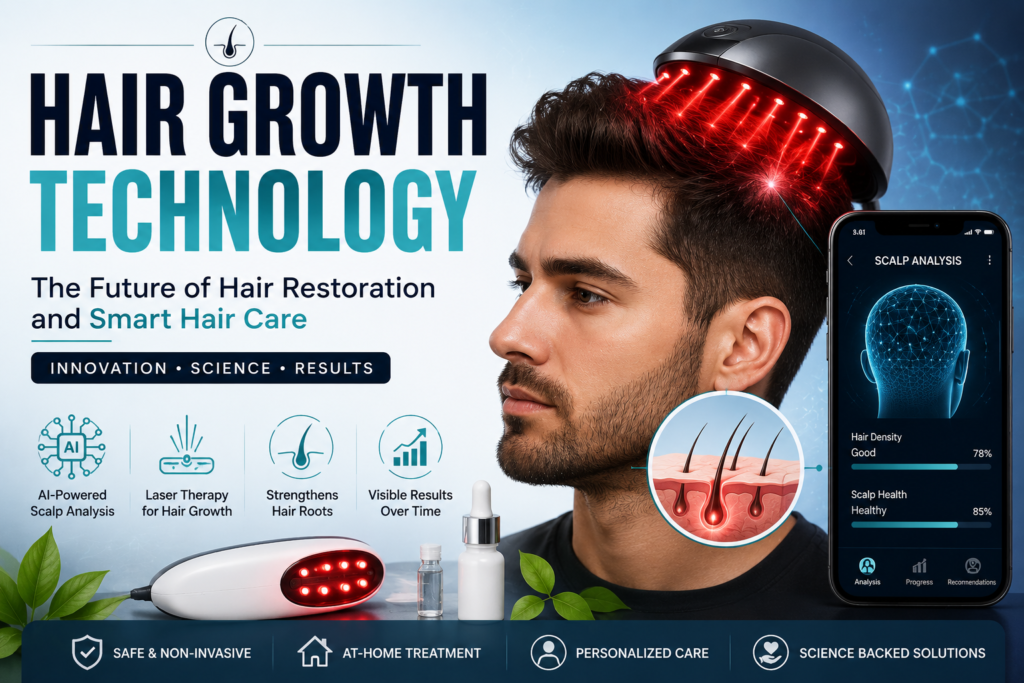
Hair growth wearables include:
- Smart laser caps
- Connected therapy helmets
- Bluetooth-enabled scalp monitoring devices
Many devices connect to smartphone apps that allow users to:
- Track treatment sessions
- Monitor progress
- Receive personalized reminders
- Analyze scalp health trends
This integration of hardware and software creates a more engaging and data-driven user experience.
Benefits of Hair Growth Technology
Personalized Treatment
Technology enables customized solutions based on an individual’s hair type, scalp condition, and hair loss pattern.
Convenience
Many devices can be used at home, reducing the need for frequent clinic visits.
Early Detection
AI and imaging systems can identify hair loss at an early stage when treatment is often more effective.
Improved User Engagement
Mobile apps and smart devices encourage users to remain consistent with their treatment plans.
Non-Invasive Solutions
Many modern technologies provide alternatives to surgical procedures.
Challenges and Limitations
Despite its advantages, Hair Growth Technology faces several challenges.
Cost
Advanced devices and treatments can be expensive, limiting accessibility for some consumers.
Variable Results
Hair growth outcomes vary depending on genetics, health conditions, age, and treatment consistency.
Scientific Validation
While many technologies show promise, not all products on the market are supported by strong scientific evidence.
Consumers should carefully research products before making purchasing decisions.
User Expectations
Many people expect immediate results, but hair growth is a gradual process that often requires patience and long-term commitment.
Future Trends in Hair Growth Technology
The future of Hair Growth Technology is incredibly promising.
Several emerging trends are expected to shape the industry:
AI-Driven Personalization
Artificial intelligence will continue improving treatment recommendations based on real-time data.
Smart Beauty Ecosystems
Hair devices will become increasingly connected with broader beauty and health platforms.
Advanced Regenerative Medicine
Stem cell therapies and follicle regeneration technologies may offer more permanent solutions in the future.
Predictive Analytics
AI may soon predict future hair loss patterns and recommend preventive measures before significant hair thinning occurs.
Sustainable Hair Care Innovation
Companies are increasingly focusing on eco-friendly devices and sustainable manufacturing practices.
Choosing the Right Hair Growth Technology
When selecting a hair growth solution, consumers should consider:
- Scientific evidence
- Safety certifications
- Ease of use
- Cost-effectiveness
- Professional recommendations
- Customer reviews
Consulting a dermatologist is recommended before beginning any advanced hair restoration treatment.
Conclusion
Hair Growth Technology is transforming the way individuals manage hair loss and scalp health. From laser therapy and AI-powered diagnostics to regenerative medicine and wearable devices, innovation is creating new possibilities for effective and personalized hair restoration.
As technology continues to evolve, consumers can expect more accurate, convenient, and scientifically advanced solutions that address the root causes of hair loss. While no single treatment works for everyone, the combination of technology, data, and medical research is bringing the beauty industry closer to achieving truly personalized hair care.
For individuals seeking healthier, stronger, and fuller hair, Hair Growth Technology represents one of the most exciting and rapidly advancing areas in modern beauty innovation.